
Have you ever caught yourself nodding in agreement when you actually disagree? Or noticed that hollow feeling after spending time with certain people—as if you’ve been performing rather than simply being? These moments aren’t random discomforts. They’re quiet signals from your authentic self, whispering beneath the noise of everyone else’s needs.
Self-abandonment happens gradually, almost invisibly. It’s the slow process of setting aside your authentic needs, feelings, and boundaries to maintain connection with others. While caring for people is beautiful and necessary, there’s a tipping point where you begin to vanish from your own life.
“I don’t even know who I am anymore when I’m not taking care of someone else,” a client once shared with me, the realization dawning in their eyes as they spoke.
When self-abandonment occurs, something profound happens. A false self takes over —a version of you that becomes like a small moon orbiting around the great big planet of other people’s needs. This role-self knows exactly how to shape-shift to keep everyone else comfortable, even as you feel increasingly hollow inside.
Your authentic self doesn’t disappear completely—it just gets buried under layers of adaptation, rejection, and compensation. Sometimes it speaks through your body when your words can’t find their way out.
Before: Constant tension and self-doubt.
After: Moments of calm and self-trust
The journey from self-abandonment to self-connection isn’t about becoming a different person. It’s about returning to yourself—finding your way back to the wisdom and worth that was always there, waiting beneath the adaptations.
Before healing begins, many clients describe living in a state of constant vigilance—scanning environments for what others need, anticipating how to be useful, and feeling a persistent undercurrent of anxiety. After developing a relationship with their authentic self, they notice something different: moments of genuine calm, the ability to sit with uncomfortable emotions without needing to avoid or be immersed in them, and a growing sense of trust in their own perceptions.
Sara’s journey: From emptiness to embodiment

“I’m great at knowing what everyone else needs,” she told me in our first session. “But when someone asks what I want, my mind goes completely blank.”
Over months of gentle exploration, Sara began noticing the subtle ways she’d learned to abandon herself. How she’d laugh at jokes that actually hurt her feelings. How she’d agree to plans that depleted her. How she’d silence her own voice to avoid conflict.
“The hardest part,” she shared later in our work, “was realizing that I wasn’t just doing this to please others. I was doing it because somewhere deep down, I believed I wasn’t worth protecting.”
Through our sessions, Sara learned to recognize the physical sensations that accompanied self-abandonment—the tightness in her throat, the heaviness in her chest, the slight nausea that would arise when she betrayed her own boundaries. These bodily signals became her guides, helping her reconnect with her authentic needs and feelings.
“Last week,” she told me in a session about six months in, “someone asked where I wanted to go for dinner, and I actually had an answer. I could feel what I wanted. It seems so small, but it felt enormous.”
The quiet signs you might be abandoning yourself
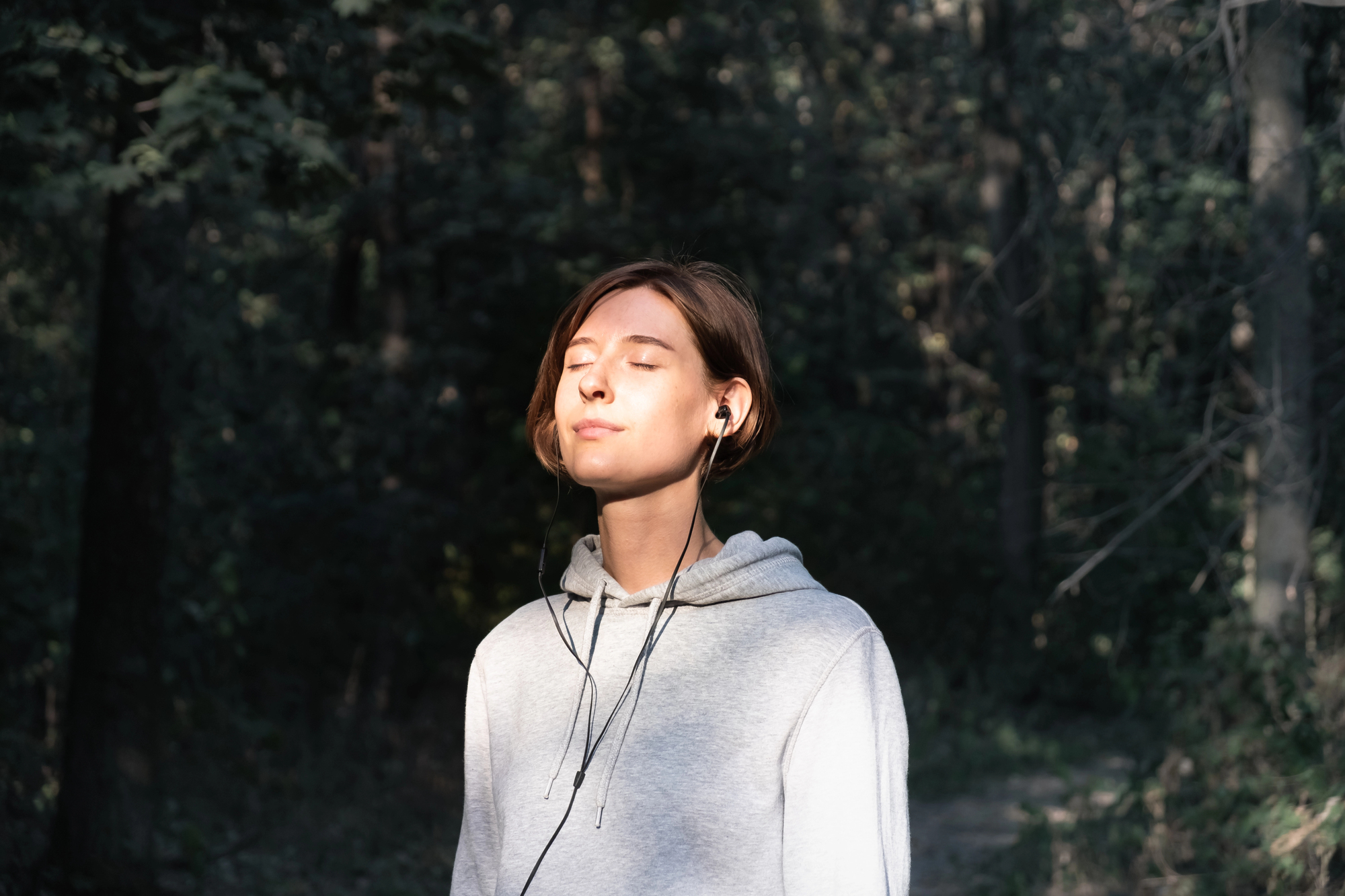
Your body often recognizes self-abandonment before your mind does. You might notice:
- A tightness in your chest when you’re about to speak your truth, followed by swallowing your words
- Exhaustion that feels deeper than physical tiredness after social interactions
- Difficulty knowing or saying what you actually want when someone asks a simple question like “What do you feel like doing?”
- Feeling resentful toward people you care about, yet unable to express it
- The sensation that you’re performing rather than being present
- A persistent feeling of emptiness or disconnection, even when surrounded by people who care about you
These experiences aren’t character flaws or signs of weakness. They’re your authentic self sending distress signals, trying to be heard beneath the noise of adaptation.
How we learn to abandon ourselves
Self-abandonment isn’t something we choose consciously. It’s a survival strategy we develop, often in childhood, when our authentic needs were met with:
- Dismissal and invalidation: “Stop being so sensitive”
- Punishment: “How dare you talk back to me”
- Neglect: Being ignored when expressing needs
- Conditional love: Only receiving care when being “good” or useful
- Chaos: Living in environments where your needs threatened the family system
When a child learns that their authentic self isn’t safe to express, they develop a false self that knows exactly what others want. This adaptation helps them survive emotionally in their environment—but carries a heavy cost into adulthood.
As one client described it: “I became so good at being what everyone else needed that I forgot there was a ‘me’ underneath it all.”
EMDR and trauma: When self-abandonment lives in the body

For many people, self-abandonment isn’t just a pattern of behavior—it’s stored in the body as implicit memory, as trauma that gets activated in relationships. This is where approaches like EMDR (Eye Movement Desensitization and Reprocessing) can help.
EMDR isn’t about erasing your past—it’s about giving your nervous system new ways to respond. It helps process those moments when you learned it wasn’t safe to have needs, to have feelings, to have boundaries. It addresses the bodily experience of self-abandonment, not just the cognitive understanding of it.
“I always knew intellectually that I deserved to take up space,” another client shared. “But after EMDR, I could feel it in my body for the first time. The difference was profound.”
Some clients find it helpful to:
- Pause before automatically saying “yes” and ask: “What do I actually want here?”
- Practice noticing bodily sensations when making decisions
- Start with small boundaries in safe relationships
- Work with a therapist who can help you recognize patterns of self-abandonment
- Develop compassion for the parts of you that learned to disappear
One client described their healing journey this way: “At first, I felt selfish for even considering my own needs. But over time, I realized that when I honor myself, I actually have more genuine connection with others—not less.”
The deeper healing: From self-abandonment to self-connection

Recovering from self-abandonment isn’t just about learning to say “no” more often. It’s about healing the underlying belief that your authentic self is somehow unworthy of love or belonging unless you’re serving others.
In therapy, we work to help your nervous system understand that it’s safe to exist as you truly are—with all your messy emotions, needs, desires, and boundaries intact. This doesn’t happen overnight, but each small moment of choosing yourself builds a foundation of self-trust.
When you begin to feel safe in your own skin, something remarkable happens. You discover that honoring yourself actually creates more authentic connections with others, not fewer. The relationships that can’t accommodate your authentic self may shift or fade, making room for connections where you don’t have to abandon yourself to belong.
As one client beautifully put it: “I used to think that if people saw the real me, they’d leave. What I’ve found is that when I show up authentically, the right people stay—and our connection is deeper than I ever thought possible.”
Why clients trust this approach
My practice is trauma-informed and attachment-focused, which means I understand how early relationships shape our capacity for self-connection. I specialize in helping adults, especially those who’ve carried too much for too long, untangle complex trauma and attachment wounds with care and patience.
Healing isn’t about fixing what’s broken—it’s about reconnecting with who you truly are beneath survival patterns. If you’re curious but scared about starting therapy, know this: it’s okay to take your time. Your pace of healing is the right pace, and I’m here when you’re ready to feel more like yourself again.


